
History of Scouting
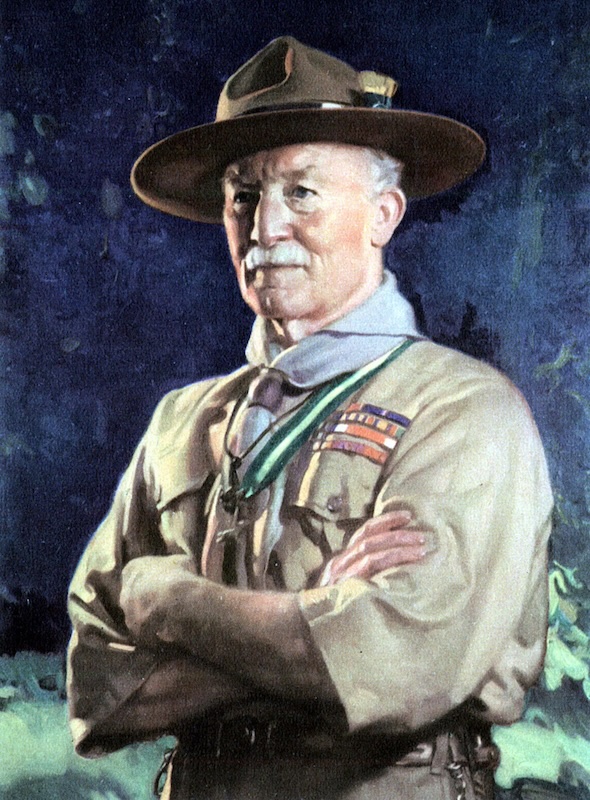
Boy Scout founder Robert Baden-Powell in scout uniform.
Universal History Archive/Universal Images Group/REX/Shutterstock.com
Origins of the Movement
Scouting was founded in 1907 by Robert Baden-Powell, a British Army officer who saw the need to equip young people with practical life skills, resilience, and a spirit of service. His experiences in the military, especially during the Siege of Mafeking in South Africa (1899–1900), inspired him to adapt military scouting techniques into activities suitable for young boys.
That same year, Baden-Powell held the first experimental Scout camp on Brownsea Island in Dorset, England. The camp brought together boys from different backgrounds to live outdoors, learn pioneering and survival skills, and practice teamwork. It was a great success and is now considered the birth of the Scouting movement.
Early Growth
In 1908, Baden-Powell published Scouting for Boys, a handbook that quickly spread across the world. Local groups, often called patrols or troops, began to form spontaneously in Britain and beyond. Within a few years, Scouting had spread to many countries, and it soon became an international movement.
The first official Boy Scout rally took place at the Crystal Palace in London in 1909, drawing more than 10,000 young Scouts. Among the participants were also girls who wished to join, which led to the creation of the Girl Guides under the leadership of Agnes Baden-Powell, Robert’s sister.
Scouting Around the World
By 1920, Scouting had grown into a global movement. That year, the first World Scout Jamboree was held in London, bringing together 8,000 Scouts from 34 countries. The international brotherhood of Scouting was firmly established, and Baden-Powell was acclaimed as the “Chief Scout of the World.”
Scouting spread rapidly through the Commonwealth, Europe, the Americas, and eventually Africa and Asia. Each country adapted Scouting to its own cultural context while maintaining the shared principles of the Scout Promise and Law.
Scouting in South Africa
Scouting reached South Africa in 1908, only a year after its founding. It grew steadily, with troops forming in towns and rural areas alike. Scouts in South Africa were involved in community service, conservation, and leadership development, with the movement evolving alongside the country’s complex history.
Today, Scouts South Africa is part of the World Organization of the Scout Movement (WOSM) and offers a wide programme for children and youth, including Cubs, Scouts, Rovers, and Adult Leaders.
Modern Scouting
Over the past century, Scouting has adapted to the needs of new generations while staying true to its founding principles of duty to God, duty to others, and duty to self. Programmes now incorporate science, technology, environmental stewardship, and global citizenship alongside traditional outdoor adventure.
Scouting is now one of the largest youth movements in the world, with over 57 million members in more than 170 countries. Its mission remains the same: to help young people develop into responsible, self-reliant, and active citizens who make a positive difference in their communities and the world.